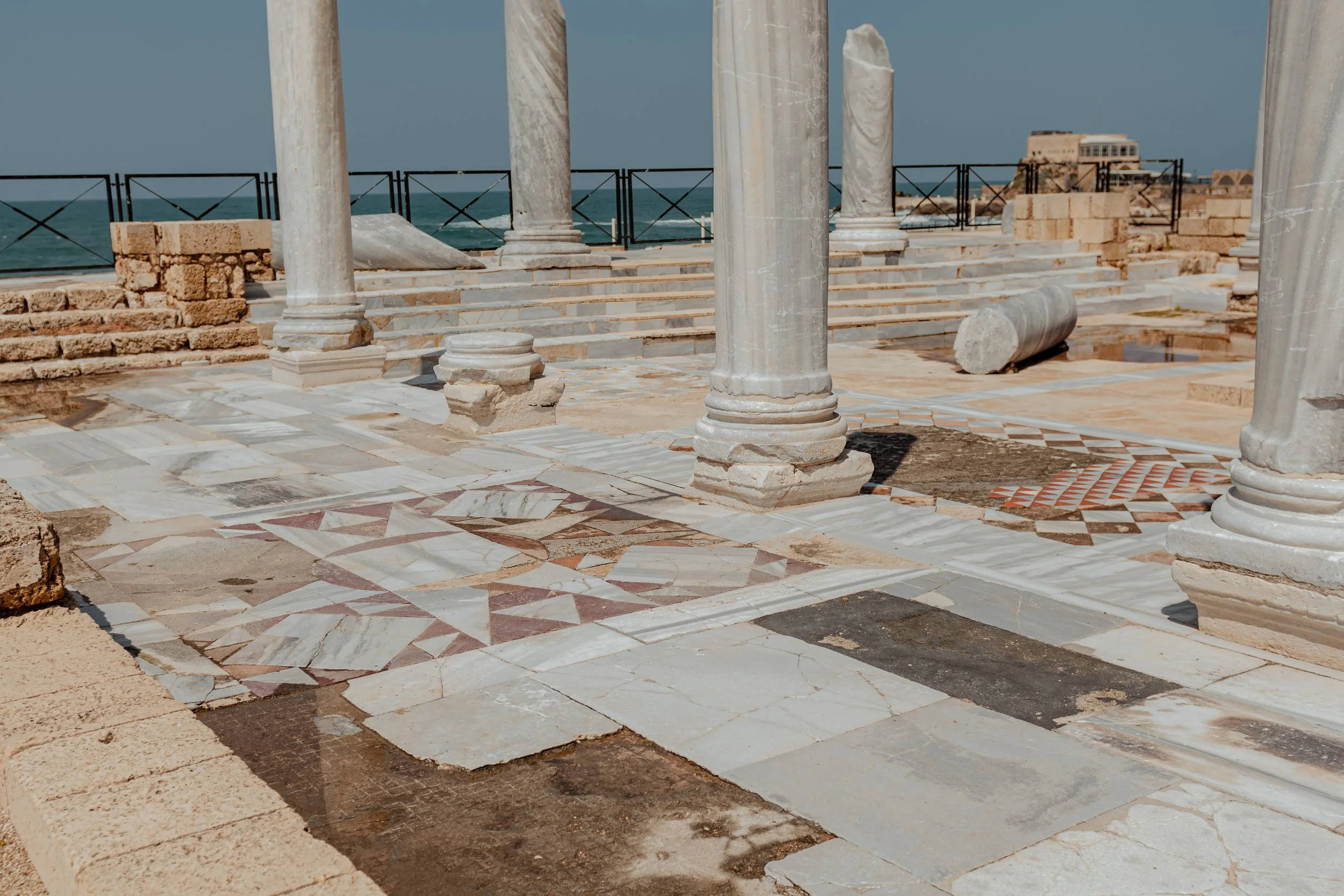
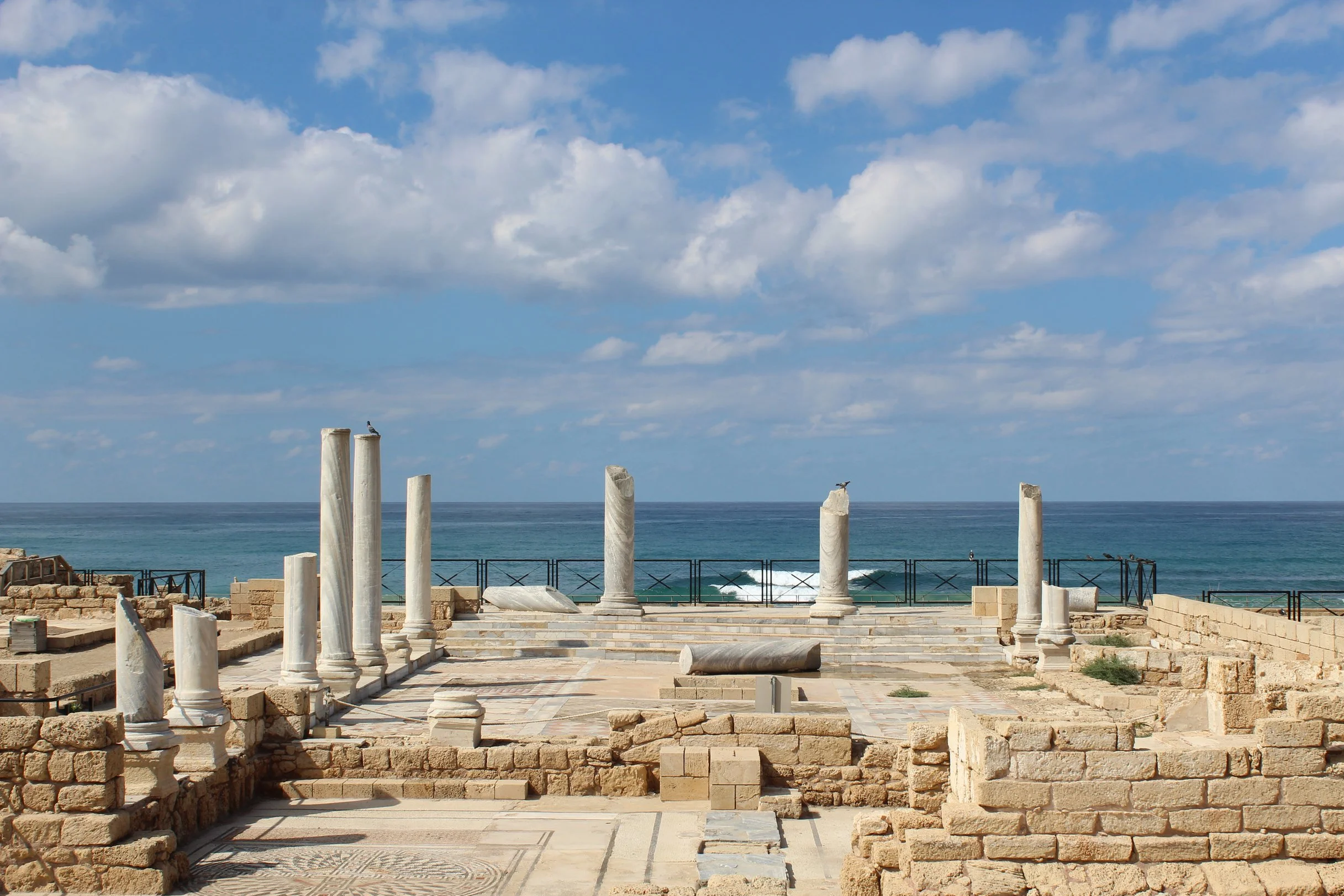
On Israel’s Mediterranean coast, roughly halfway between Tel Aviv and Haifa, lie the ruins of Caesarea Maritima, the port city Herod the Great built and named for his patron, Caesar Augustus. At the southern end of the city, facing the sea, stands its theater. Lacking a natural slope for the seats, Herod’s builders raised an entire seating area on a semicircle of stone vaults. It was among the first Roman-style entertainment venues Herod built, and it held about 4,000 people.
Caesarea appears again and again in the book of Acts. Philip the evangelist preached his way up the coast to Caesarea and later made his home in the city (Acts 8:40; 21:8). Here a Roman centurion named Cornelius, “a devout man and one who feared God” (Acts 10:2), sent for Peter, and the Holy Spirit fell on Gentiles as they heard the Gospel (Acts 10:44–48). Here Herod Agrippa I, grandson of Herod the Great, accepted the crowd’s cry, “The voice of a god and not of a man!” and was struck down by an angel of the Lord (Acts 12:21–23). The first-century Jewish historian Josephus places that scene in this very theater. Years later, Paul was held prisoner in Caesarea for two years and defended his faith before the governors Felix and Festus and King Agrippa II (Acts 23:33–26:32).
As the seat of Roman government in Judea, Caesarea was home to the Roman governors, including Pontius Pilate. Over the following centuries, the theater was repeatedly remodeled. At one point, its orchestra was converted into a pool for water shows. The city itself remained in use through the Crusader period, and Crusader walls, gates and a dry moat still stand near the ancient harbor.
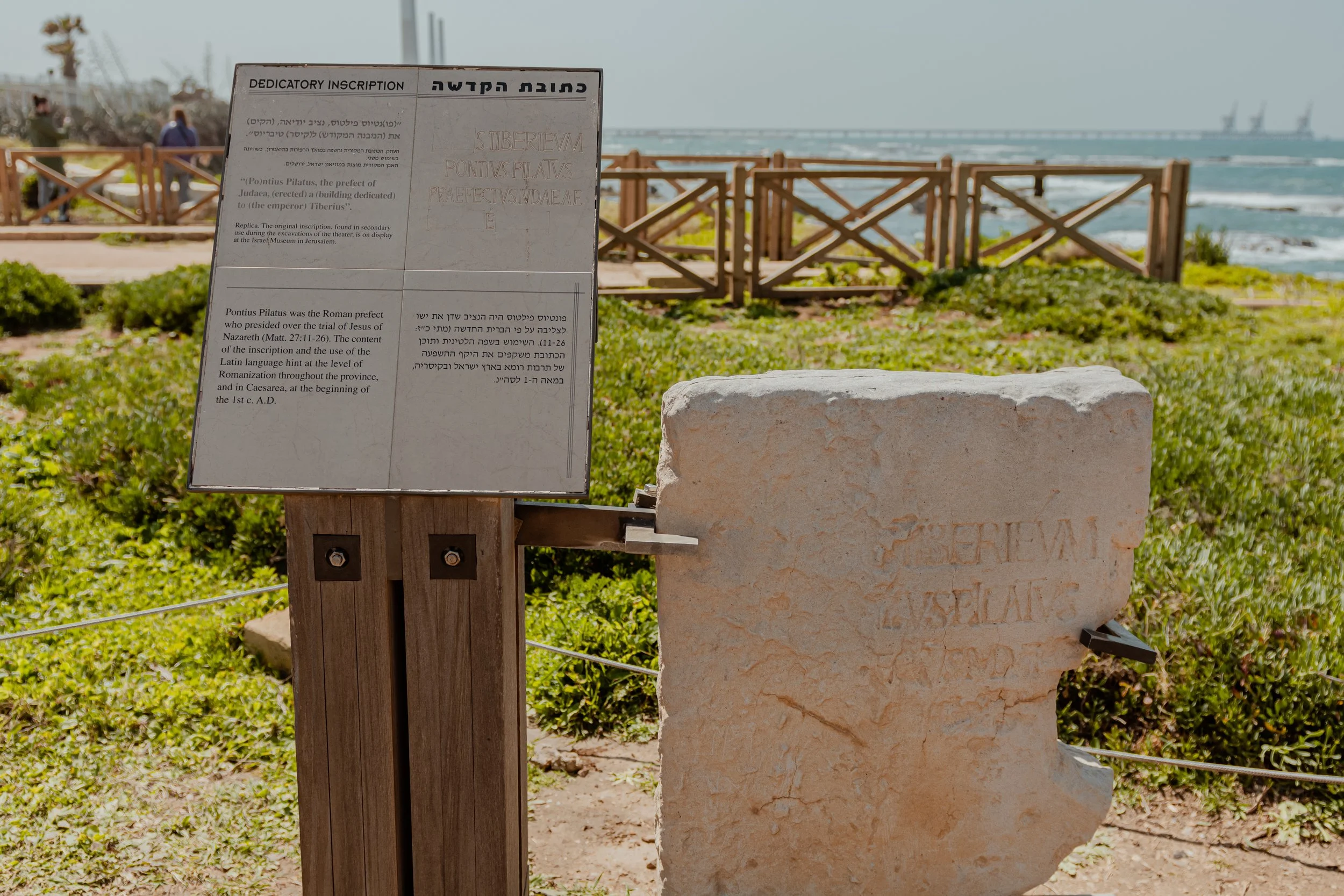
Between 1959 and 1964, an Italian expedition excavated the theater from the sand. Of the original seating, only the lowest tier remained; the upper rows visitors sit in today are a modern reconstruction set on ancient foundations. The tall stage wall that once blocked the view is gone entirely, which is why audiences now look out over the sea. Beneath a later marble floor, archaeologists found the theater’s original painted plaster. And in 1961, they turned over a limestone step bearing the name of Pontius Pilate, prefect of Judea. A replica stands at the theater today, as the original is housed in the Israel Museum in Jerusalem. That same year, the restored theater hosted its first modern concert, and it remains a working performance venue.
Herod’s builders raised a theater where no hill could hold it. Two thousand years later, its stage wall has fallen, and its upper rows have been rebuilt. Yet one stone from its stairs still testifies to the truth of God’s Word. Kings build for their own glory, but it is the Lord who “by wisdom founded the earth” (Prov. 3:19), and what He establishes endures.
Caesarea