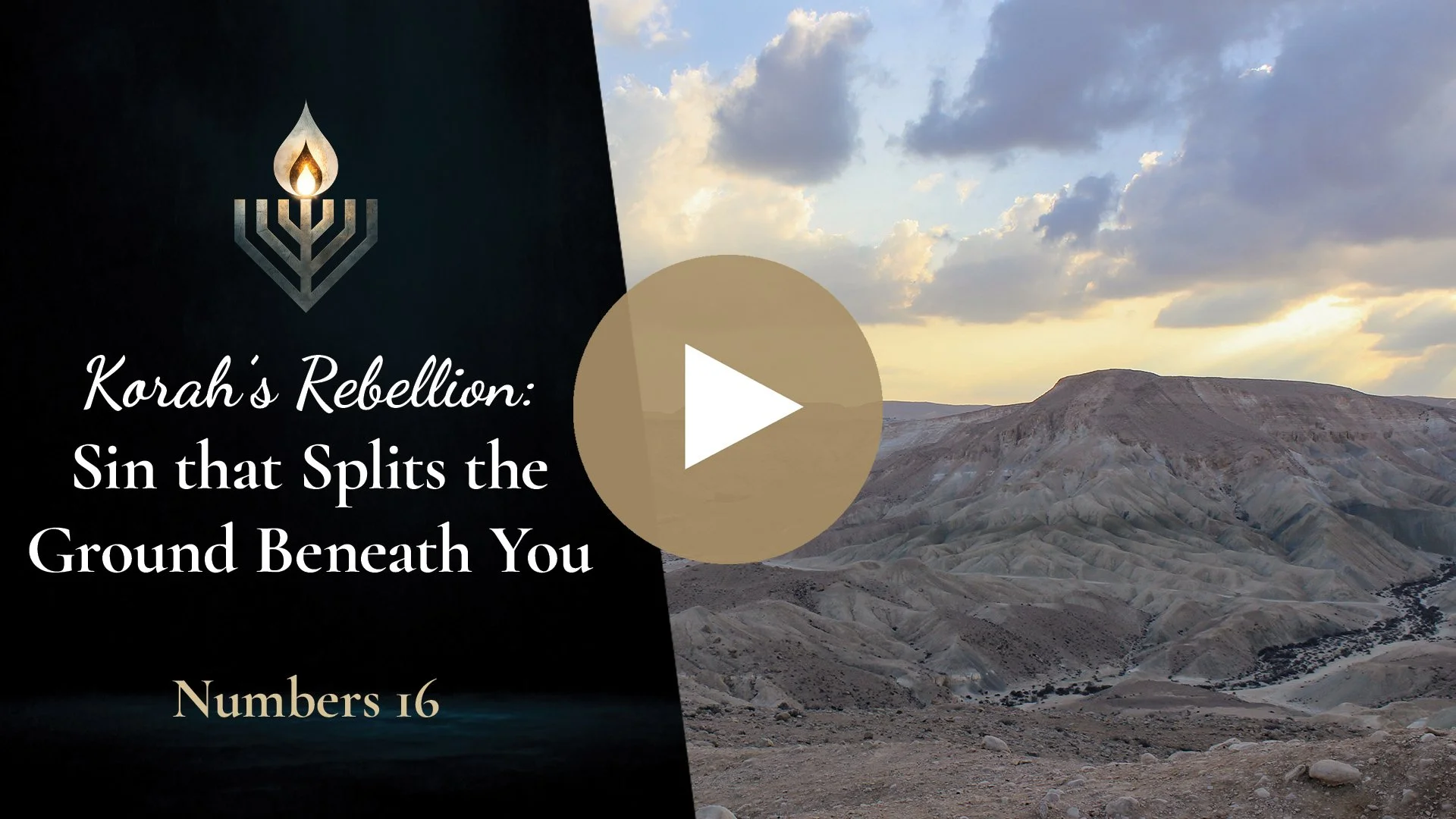
Korah's Rebellion: Sin that Splits the Ground Beneath You
What happens when the portion God gives no longer feels enough? From the stark wilderness of southern Israel, Rev. Ilse Strauss exposes how quiet discontent can harden into full-blown rebellion—and why the same danger still lives in us today. A piercing look at envy, entitlement, and the true nature of God-honoring leadership.
(Click on the image below to view the teaching.)
Ben-Gurion Tomb National Park
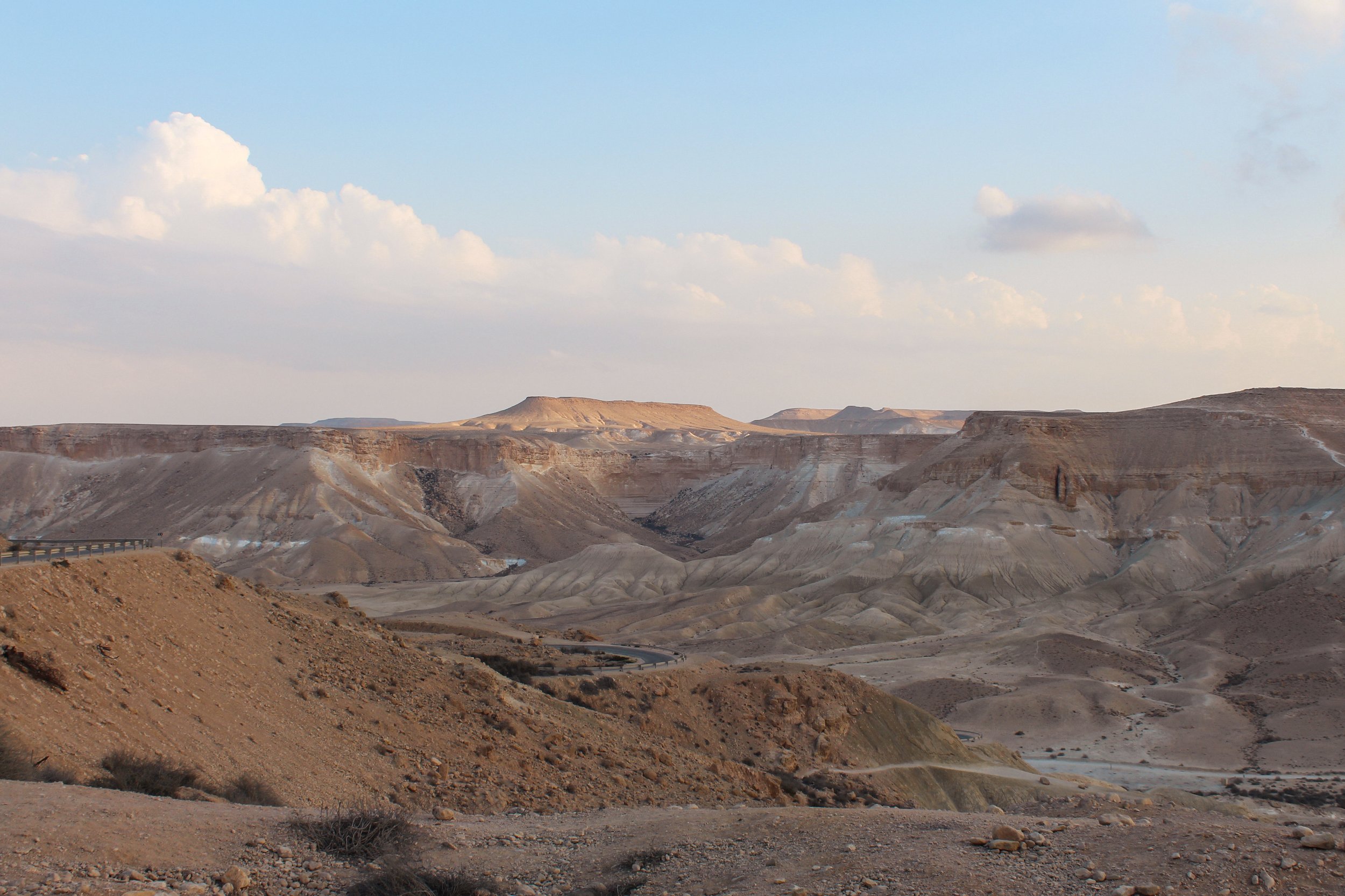
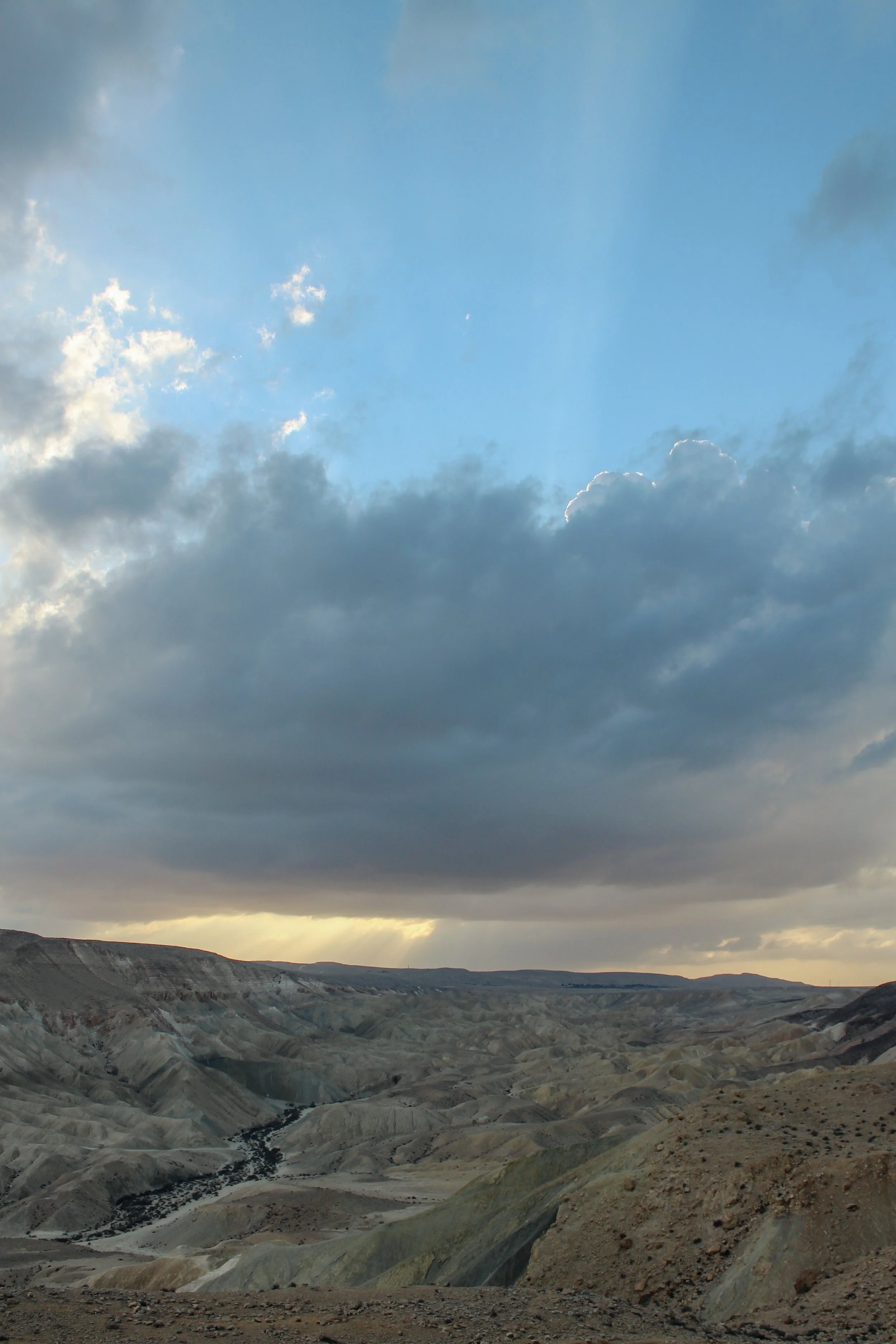
This teaching was filmed at Ben-Gurion Tomb National Park, a place of peaceful beauty overlooking the Tsin (Zin) Canyon and the Avdat highlands in the heart of Israel’s Negev. The graves of David and Paula Ben-Gurion rest here, facing a vast wilderness that once tested the faith of the Children of Israel and later inspired the visionary leader who helped establish the modern State of Israel.
Israel’s first prime minister believed the Negev held the future of the Jewish state. He famously championed its development, choosing to live simply at nearby Kibbutz Sde Boker as an expression of faith in the land and its people. The path to the gravesite winds through carefully cultivated native plants, a quiet testimony to life and growth in even the harshest environments.
It is within this setting that we explore the biblical account of Korah’s rebellion in Numbers 16. The surrounding landscape borders the Wilderness of Zin, a region central to Israel’s 40-year journey and a place repeatedly marked by testing, discontent and divine correction.
From this area, Moses sent spies to explore the land of Canaan (Numbers 13). Here, Israel wrestled with fear, trust and obedience. Nearby, Moses sought water for the people in a moment of deep frustration, striking the rock at Meribah and forfeiting his own entry into the Promised Land (Numbers 20). The Wilderness of Zin thus became a place where leadership was tested and refined.
It was against this bleak backdrop of disappointment, judgment and spiritual discontent that Korah’s rebellion erupted. Korah’s challenge to Moses and Aaron was not merely political but deeply spiritual. Cloaked in language of equality and holiness, the rebellion was actually fueled by envy, entitlement and dissatisfaction with God’s assigned roles. Korah’s downfall serves as a sobering warning: rebellion often begins not with loud defiance but with quiet discontent allowed to grow unchecked.
Standing above the vast desert expanse, the lesson becomes unmistakable. The wilderness exposes the heart, stripping away illusions of control and revealing whether obedience flows from humility or from self-interest. In contrast to Korah’s pursuit of honor and power, the setting of Ben-Gurion’s final resting place offers a modern echo of servant leadership, choosing faithfulness over ambition and service over status.
Let the stark beauty of the Negev invite us all to examine our own hearts regularly. Will we resist the spirit of rebellion that whispers entitlement and comparison? Or will we embrace the humility, obedience and servant leadership modeled by Moses and David Ben-Gurion? Here, between promise and fulfillment, the wilderness reminds us that true leadership—and true faith—is forged not in comfort, but in trust.