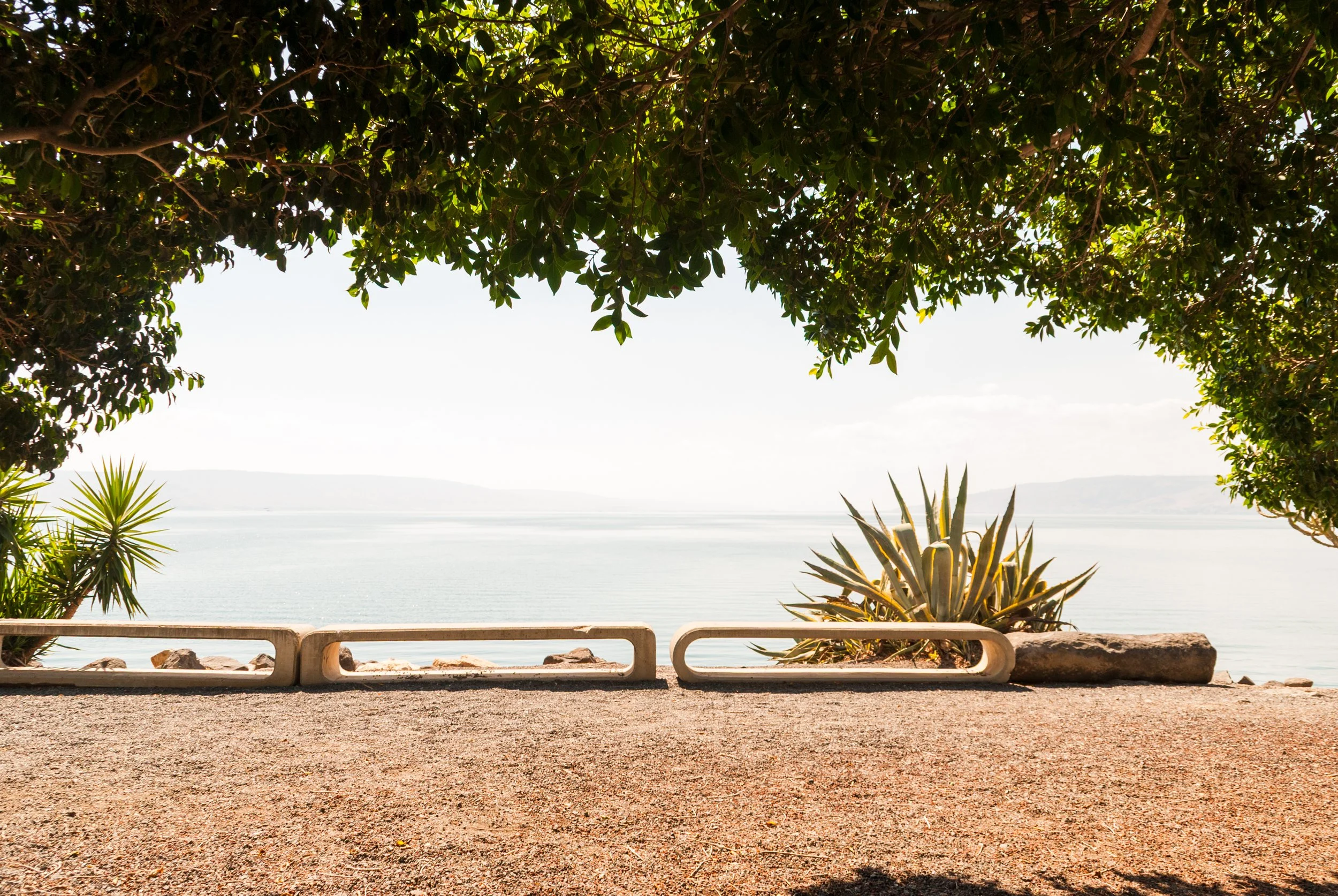
On the northern shore of the Sea of Galilee lie the ruins of Capernaum, known in Hebrew as Kfar Nahum, “the village of Nahum.” The town doesn’t appear in the Tanakh (Old Testament). It grew up in the centuries between the prophets and the Gospels, and by the time Yeshua (Jesus) began His ministry, it was a Jewish fishing village of perhaps 1,500 people. Its place on the main road linking Damascus with the coast brought a steady stream of travelers and traders, along with a tax booth to collect from them.
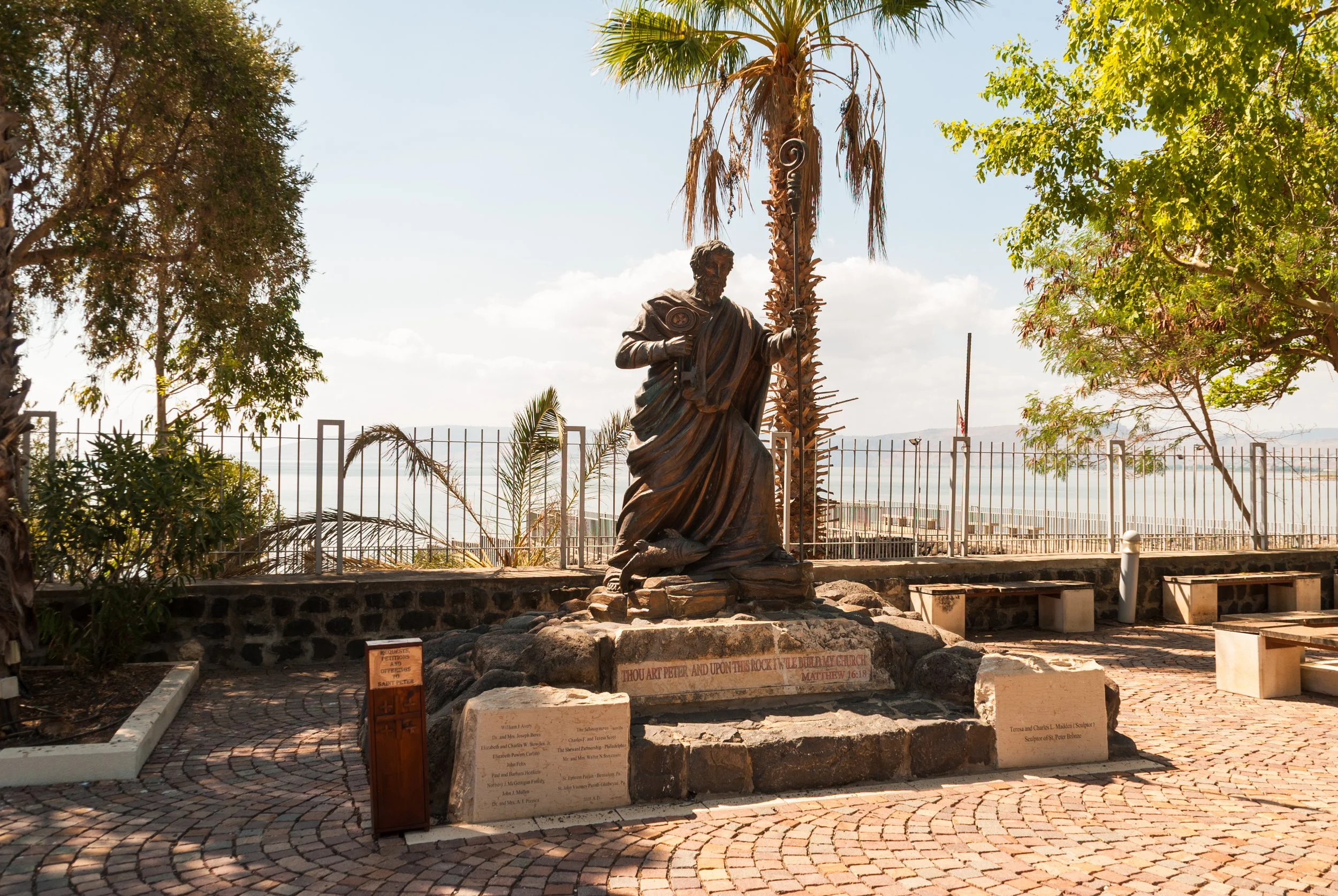
When Jesus left Nazareth, He settled here in the region of Zebulun and Naphtali, fulfilling Isaiah’s promise that a great light would dawn on Galilee (Isa. 9:1–2; Matt. 4:12–16). Four of His disciples—Peter, Andrew, James and John—fished these waters, and it was here that He called Matthew from his tax booth (Matt. 9:9).
No other town witnessed more of His ministry. In Capernaum, He cast out an unclean spirit in the synagogue (Mark 1:21–28), healed Peter’s mother-in-law (Matt. 8:14–15) and restored the servant of a Roman centurion who had built the town’s synagogue (Matt. 8:5–13; Luke 7:1–10). Four friends lowered a paralyzed man through a roof to reach Him (Mark 2:1–12). From Cana, He healed a royal official’s son who lay sick in Capernaum (John 4:46–54). Here He taught that He is the “Bread of Life” (John 6:35–59). Tradition also places the raising of Jairus’s daughter and the healing of the woman with the issue of blood here (Mark 5:22–43). Yet for all it had seen, Capernaum did not repent, and Jesus warned that it would be “brought down to Hades” (Matt. 11:23–24).
The town lived on after Him. During the Jewish revolt against Rome, commander and future historian Josephus was carried here to recover from a wound. In the centuries that followed, it flourished as a town shared by Jewish and Christian families and outlasted the Muslim conquest in the seventh century. It dwindled and was finally deserted in the 11th century, and Arabic speakers came to call the site Tel Hum.
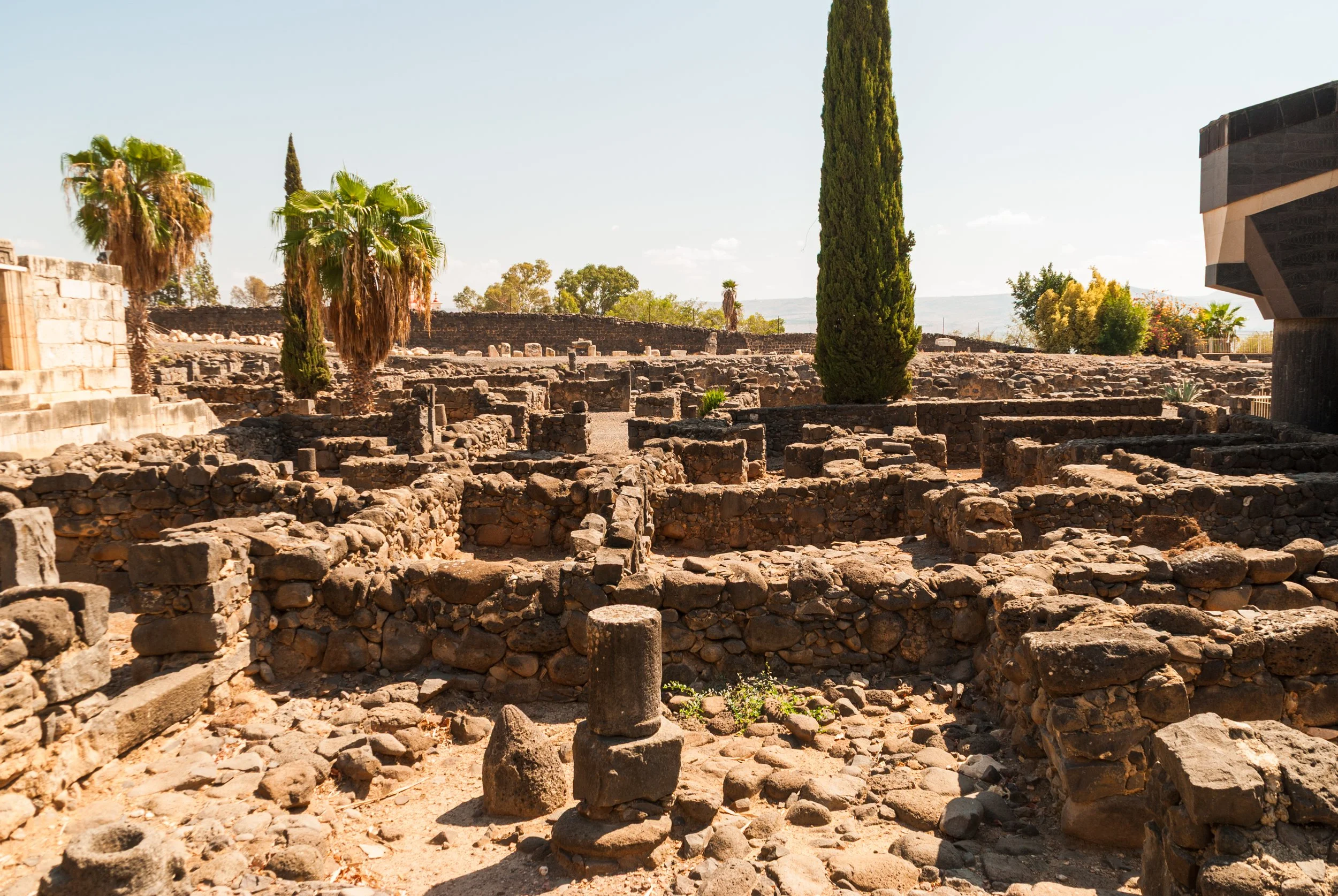
Today, visitors can walk among the black basalt homes and streets of the first-century village Jesus knew. Above them rises a white limestone synagogue built centuries after His time, decorated with carvings such as a menorah (seven-branched candelabra) and inscriptions in Greek and Aramaic. Beneath it lie basalt foundations that many believe belonged to the synagogue where He taught. Just to the south, archaeologists uncovered a house from Jesus’ day that early believers honored as Peter’s home, scratching words like “Jesus,” Lord” and “Messiah” into its plaster walls. A fifth-century octagonal church was later built over it, and now a modern church rises above the site, with a glass flor that lets visitors look down into the ancient house.
Capernaum