The City of the Great King
Jerusalem, the City of the Great King and capital of Israel, is a city like no other. With a population of roughly 800,000—Jews, Arabs, Christians, and internationals—the city is a vibrant mosaic of faith, culture and history. Modern streets bustle with high-speed buses, coffee shops, markets and universities, yet ancient walls, archeological ruins and holy sites anchor the city firmly in millennia past. Every corner of Jerusalem whispers stories of kings, prophets and generations who have longed for its streets.
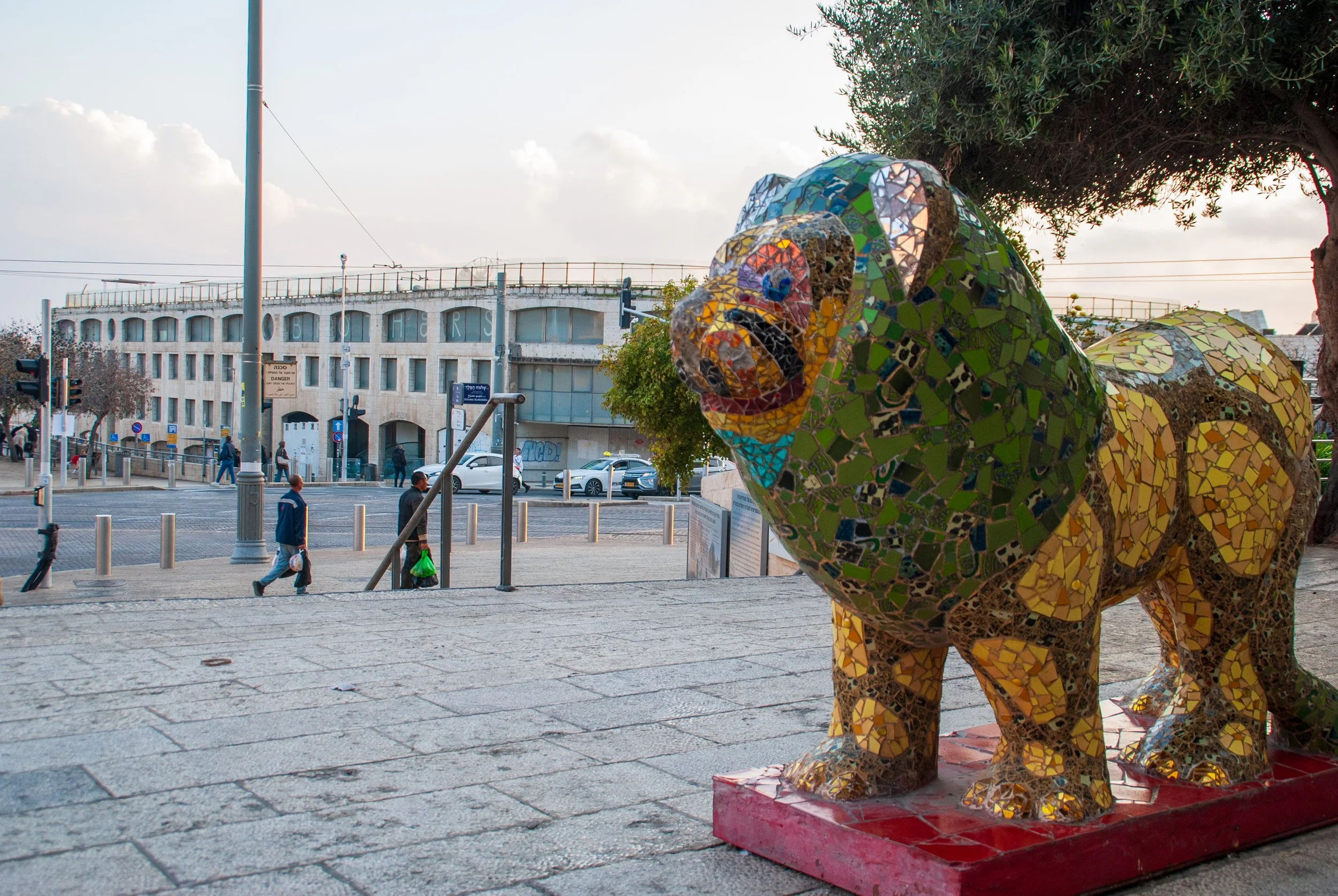
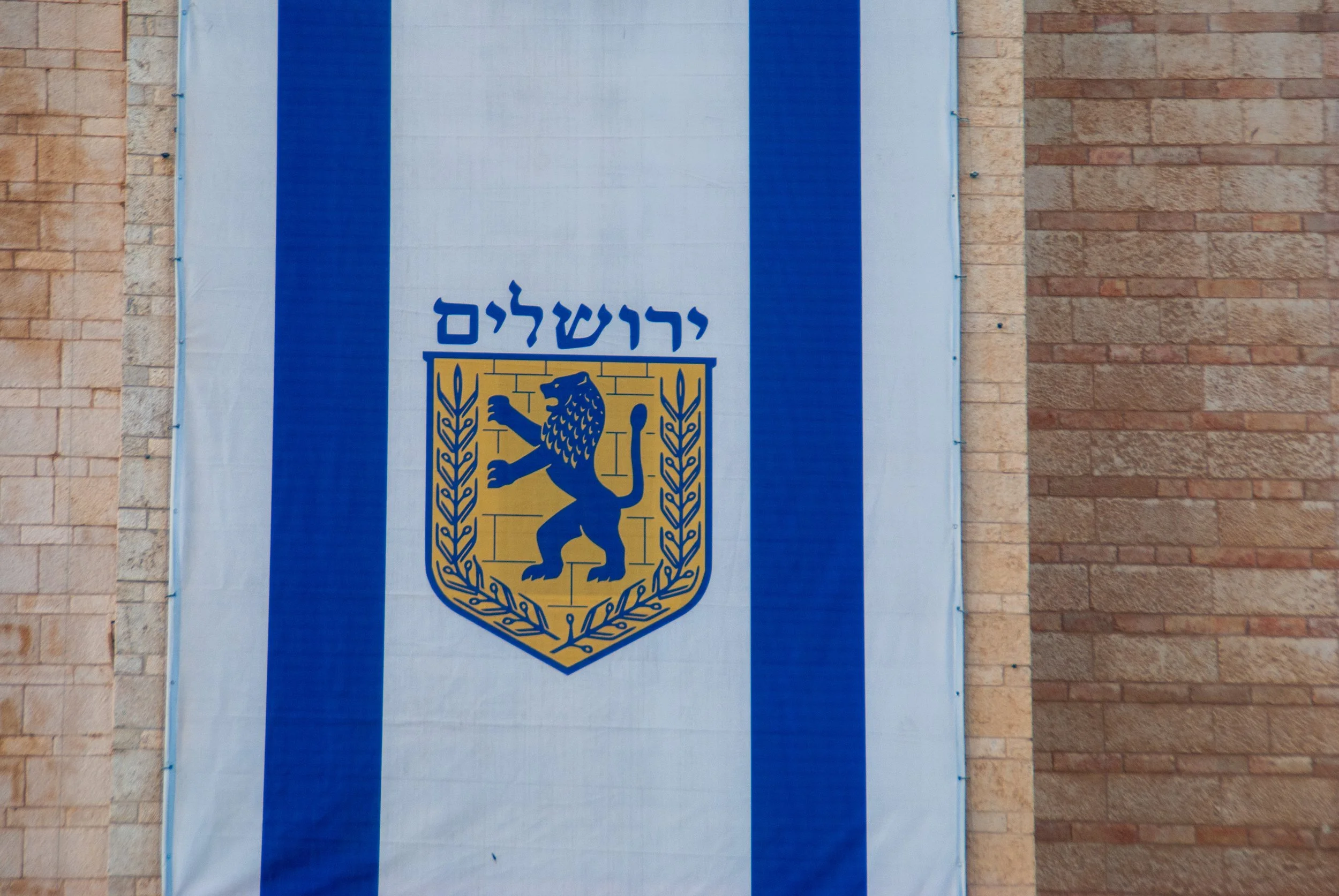
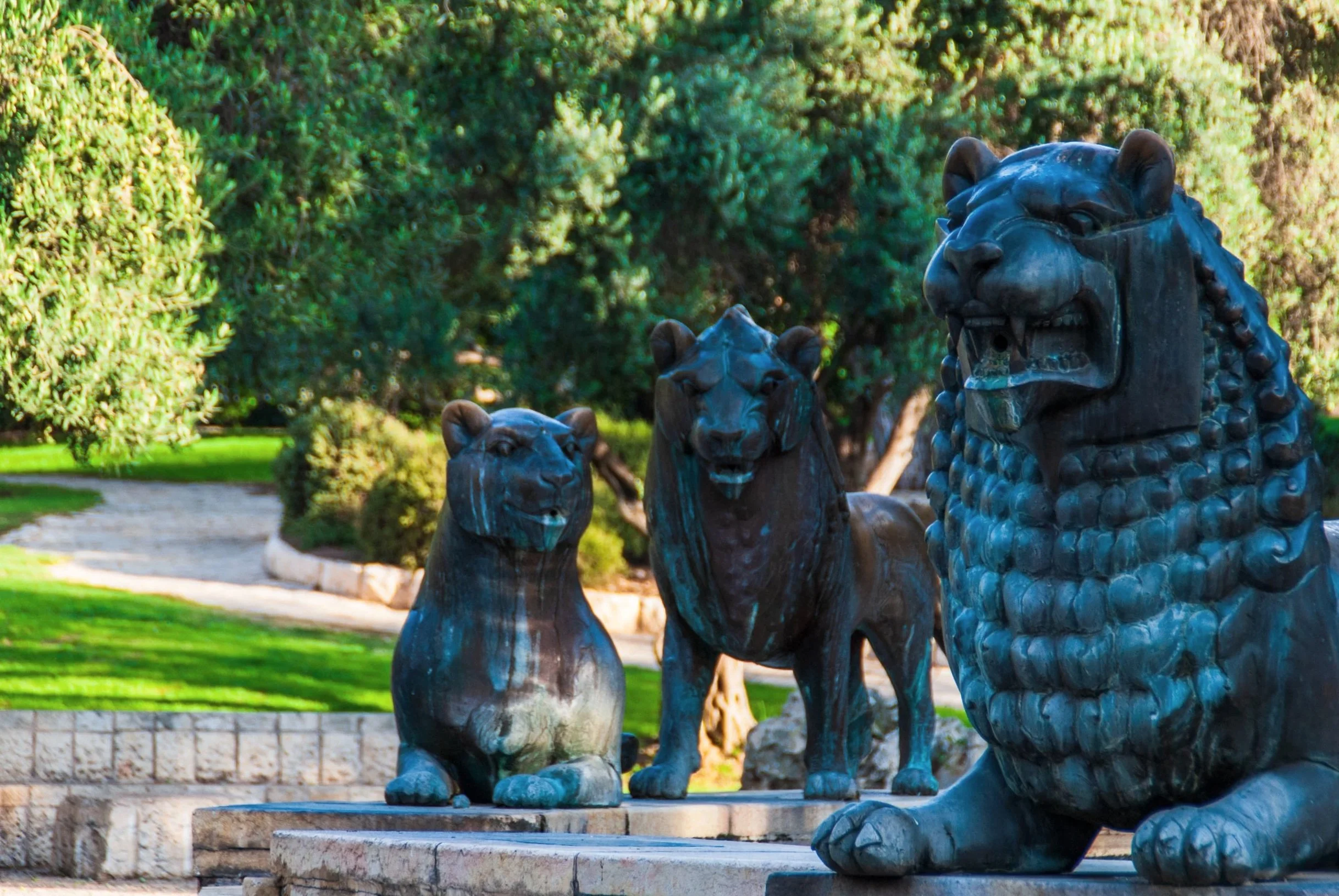
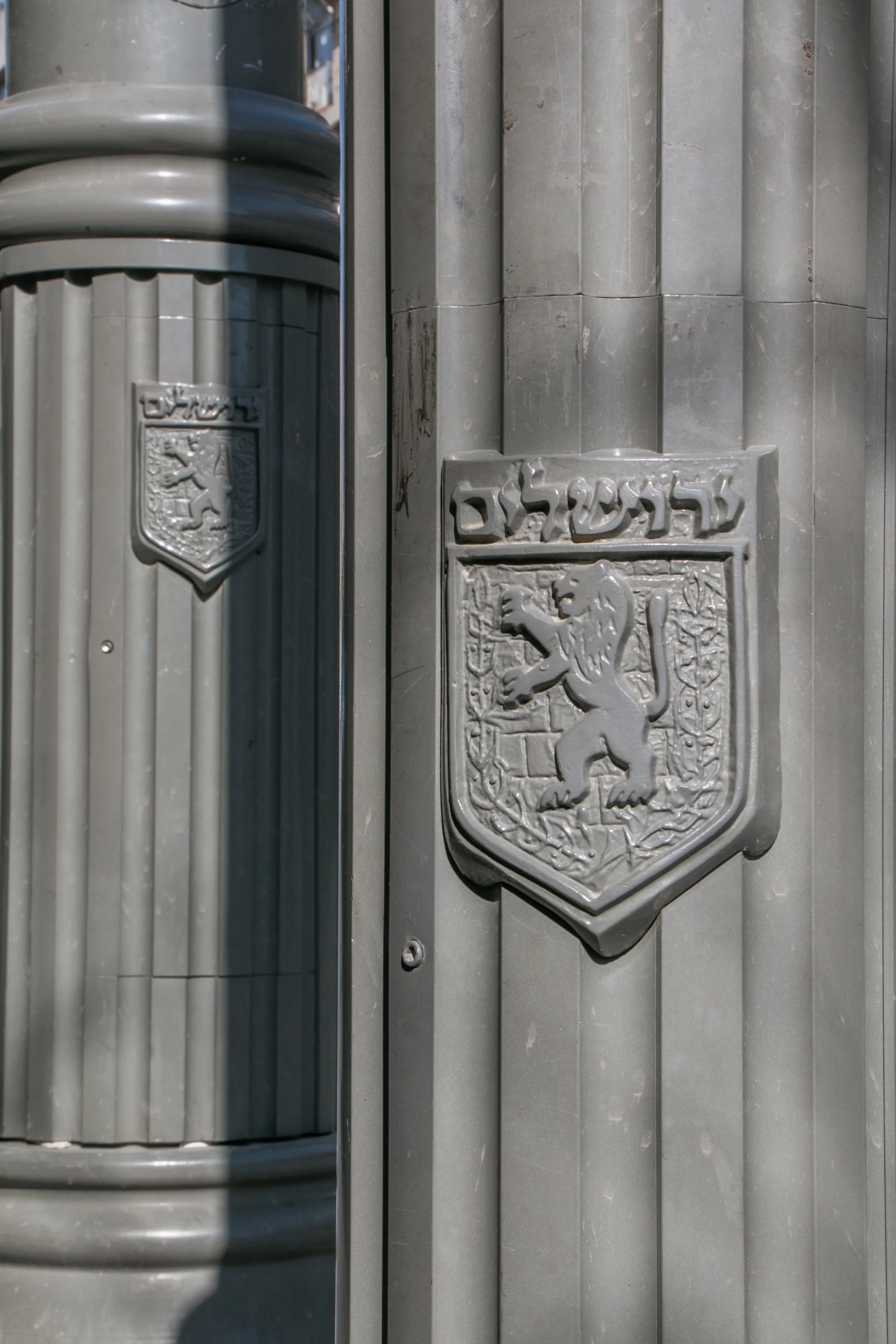
Amidst its winding alleys and city squares, one symbol stands out: the lion. From street corners to front gates, from mosaics and sculptures to municipal emblems, park benches, flags and even manhole covers, the lion is everywhere. More than mere decoration, it represents the tribe of Judah, the line from which God chose to bless Israel and accomplish His redemptive plan. Its presence is a constant reminder that the city is both historic and sacred, watched over by the symbol of strength, courage and divine authority.
The lion’s story mirrors that of Judah himself. The fourth son of Jacob, Judah was far from perfect. He plotted against his brother Joseph, made serious moral mistakes and endured personal failures. Yet through courage, responsibility and acts of self-sacrifice, Judah became the one whose line carried God’s blessing. From him came King David, Solomon and ultimately Jesus, the Lion of Judah, fulfilling Jacob’s prophecy that the scepter would not depart from Judah until Shiloh comes.
In Scripture, lions appear over 150 times, often as symbols of strength, protection and kingship, a fitting reflection of Judah, his descendants and the destiny of Israel.
Jerusalem, too, mirrors this resilience. Known as the City of Peace, its name is almost ironic. For over 4,000 years, this city has known little true peace. It has been attacked at least 52 times, besieged 23 times, captured and recaptured 44 times and utterly destroyed twice. Ancient empires and foreign armies—from Assyrians, Babylonians, Egyptians, Romans, Greeks, Persians, Crusaders, Turks to Jordanians—have each sought dominion over this city. Yet despite centuries of turmoil, Jerusalem has remained the spiritual, cultural and political heart of the Jewish people.
After Israel’s War of Independence in 1948, Jerusalem was divided, with the Jewish population holding the west and Jordan controlling the east, including the Temple Mount and Western Wall. In 1967, during the Six Day War, Israeli forces reunified the city, returning a sovereign Jewish presence to the Old City and fulfilling long-held prayers and aspirations. Today, Jerusalem thrives as the capital of Israel, a city where the modern and ancient exist side by side, where Hebrew, Arabic, English and other languages fill the air, and where new immigrants and native residents alike walk streets echoing with millennia of history.
Jerusalem’s significance, however, extends beyond history and culture to the deeply prophetic. The Bible teaches that God has chosen Jerusalem as His dwelling place on earth, a city set apart for His presence. And Scripture promises that Jerusalem will remain central to God’s plan for the nations: “I am zealous for Zion with great zeal… With great fervor I am zealous for her” (Zech. 8:2), and “Behold, I will make Jerusalem a cup of drunkenness to all the surrounding peoples… and it shall be a very heavy stone for all peoples” (Zech. 12:2). The city remains a focal point of global attention, contested by nations, yet steadfast in God’s eternal purposes.
The lion and Jerusalem are inseparable symbols of resilience, divine choice and destiny. Just as Judah’s line was chosen despite imperfection, Jerusalem was chosen as a city for the Almighty, enduring repeated attacks yet remaining the spiritual heart of His people. Walking its streets today, one sees the lion everywhere as a reminder that God’s purposes are fulfilled through unlikely vessels and places. The City of Peace may have known little earthly peace, but it remains the center of God’s plan, a beacon for the faithful, and a prophetic pivot point for the future.
From Judah’s line to the streets of Jerusalem, from the Old City walls to modern high-rises, the story is clear: God’s sovereignty endures. And Jerusalem, chosen and redeemed, remains at the heart of His eternal plan.
Jerusalem