Tabernacle (Mishkan)
Southern Israel
The Tabernacle (or Mishkan in Hebrew) was God’s designated dwelling among His people. On Mount Sinai, God made a covenant with Moses and Israelites, declaring, “If you will indeed obey My voice and keep My covenant, then you shall be a special treasure to Me above all people…” (Exod. 19:5a). God gave Moses the Ten Commandments and instructions for living as a holy people, set apart to honor Him and reflect His presence in the world.
In Exodus 25, God instructed Moses to collect offerings of gold, silver, copper, linens, colored threads, wood, oil, animal skins, precious stones and other materials to build a sanctuary: “And let them make me a sanctuary, that I may dwell among them. According to all that I show you, that is, the pattern of the tabernacle and the pattern of all its furnishings, just so you shall make it” (Exod. 25:8–9). Every detail mattered: the dimensions, the materials, the furnishings, even the garments of the priests were specified to honor God’s holiness.
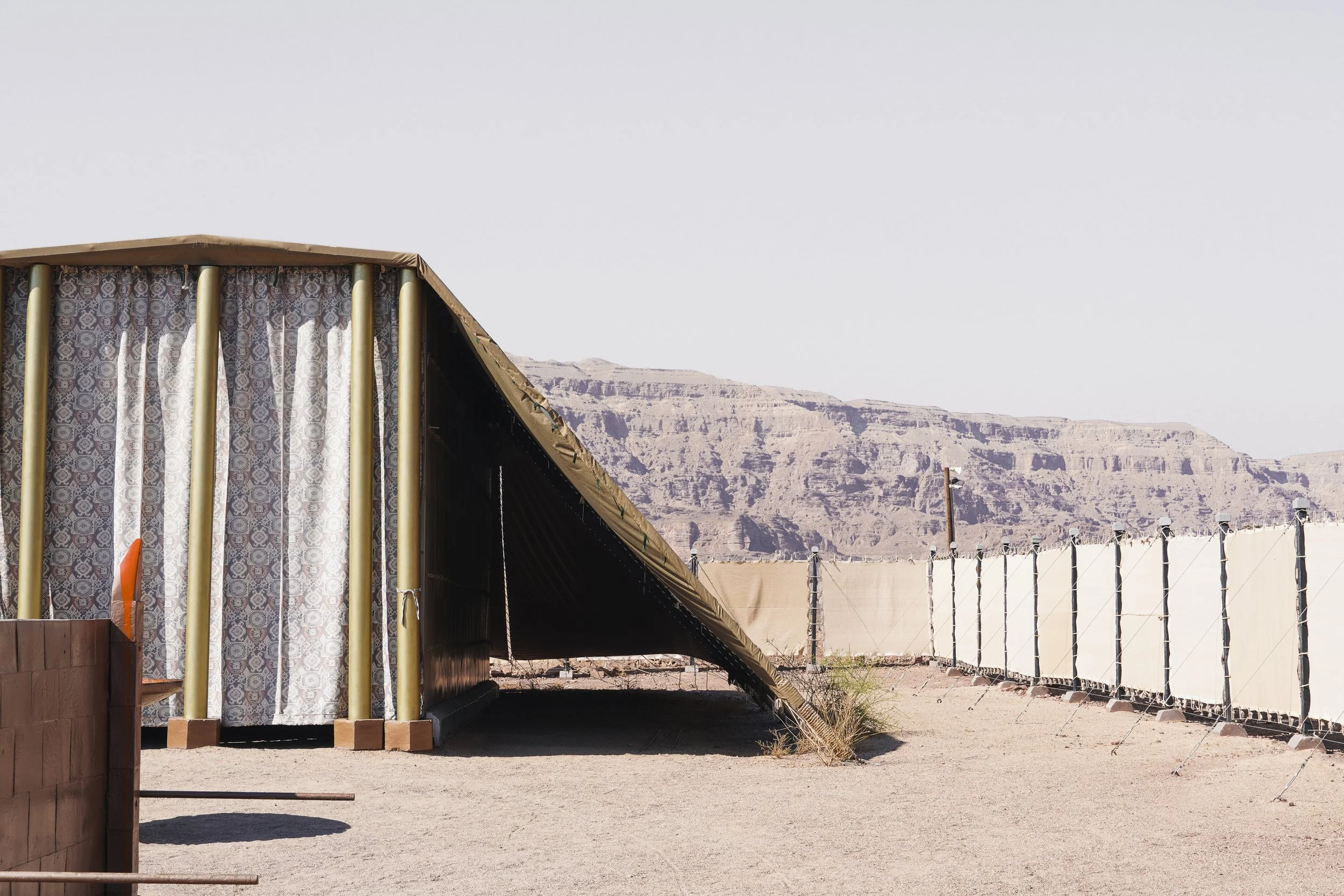
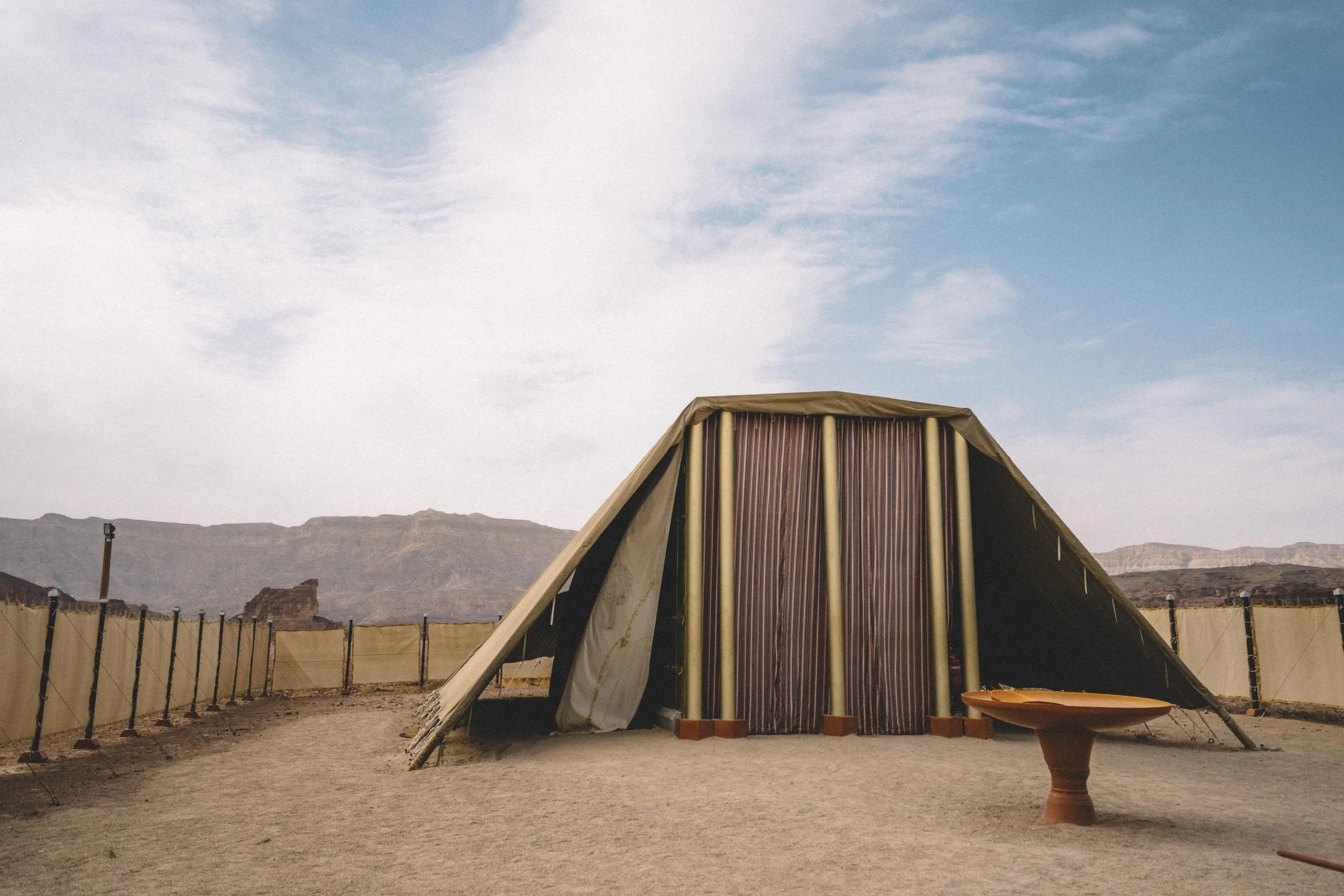
This attention to detail is reflected in the modern-day replica of the Mishkan at Timna Park in the Negev desert of southern Israel. Built according to the biblical specifications, visitors can walk through the outer court with its bronze altar and bronze laver, enter the Holy Place with its golden lampstand, table of showbread and altar of incense, and go behind the veil that was once restricted to the high priest once per year to approach the Holy of Holies with the Ark of the Covenant and the mercy seat. The replica faithfully mirrors the care and precision with which Bezalel and Aholiab, the artisans chosen by God (Exod. 35:30–35), constructed the original Tabernacle.
As Rev. Terry Mason, Bridges for Peace director of international development, explains in this week’s Ignite the Truth teaching, the Israelites gave generously and joyfully to build the Tabernacle, so abundantly that Moses eventually had to tell them to stop.
The camp in the desert was arranged by tribes around the Mishkan in the center, enclosed by linen curtains forming a courtyard where priests washed at the bronze laver before offering sacrifices on the bronze altar. The Tabernacle’s layers of animal skins, golden furnishings and intricate veil all signified God’s holiness. From the smoke of daily offerings to God’s presence in the pillar of cloud and fire, the ancient camp was a striking reminder of His presence among His people.
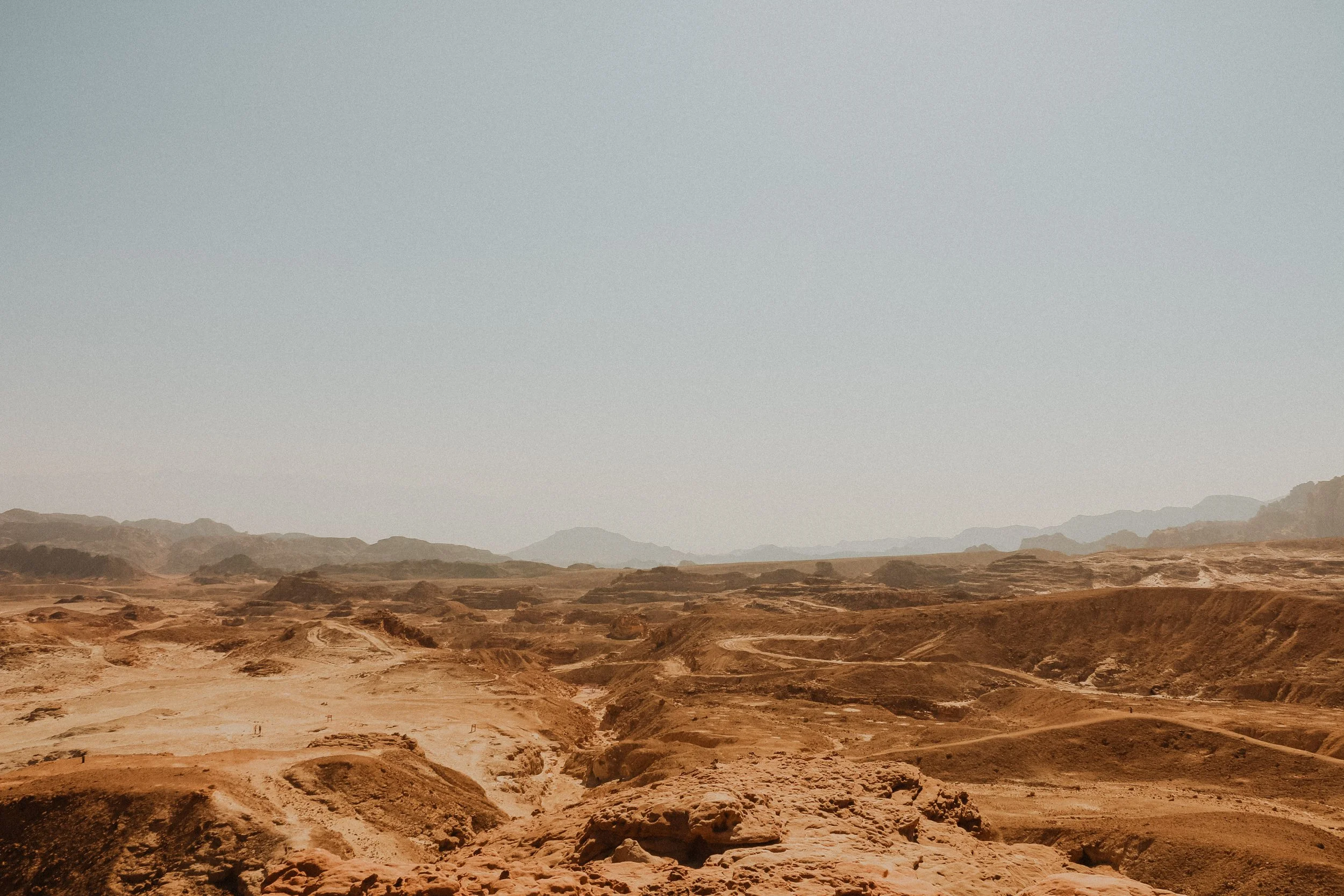
Set against the stark, red sandstone cliffs and barren plains of the Negev, this Mishkan replica offers more than a historical reconstruction. It transports visitors to a wilderness that tested faith and reliance on God, while highlighting His ongoing desire to dwell among His people. Here, the ancient and modern meet, and visitors can see, touch and walk through a representation of the space where God once revealed His presence, bringing Scripture to life and offering a vivid reminder that just as He dwelt among His people in the ancient wilderness, He continues to meet His people where they are today.