

Are You Staying Close to the Vine?
“If they do these things when the tree is green, what will happen when it is dry?”
On the road to the cross, Jesus turned to the weeping women of Jerusalem and spoke this puzzling line.
Behind those words lies a picture woven through the Hebrew Scriptures: the green, fruitful tree and the dry, withered one.
Hours earlier, Jesus had shown His disciples how to stay green: abide in the Vine.
Hard days are coming. Are you staying close?
(Click on the image below to view the teaching.)
Via Dolorosa
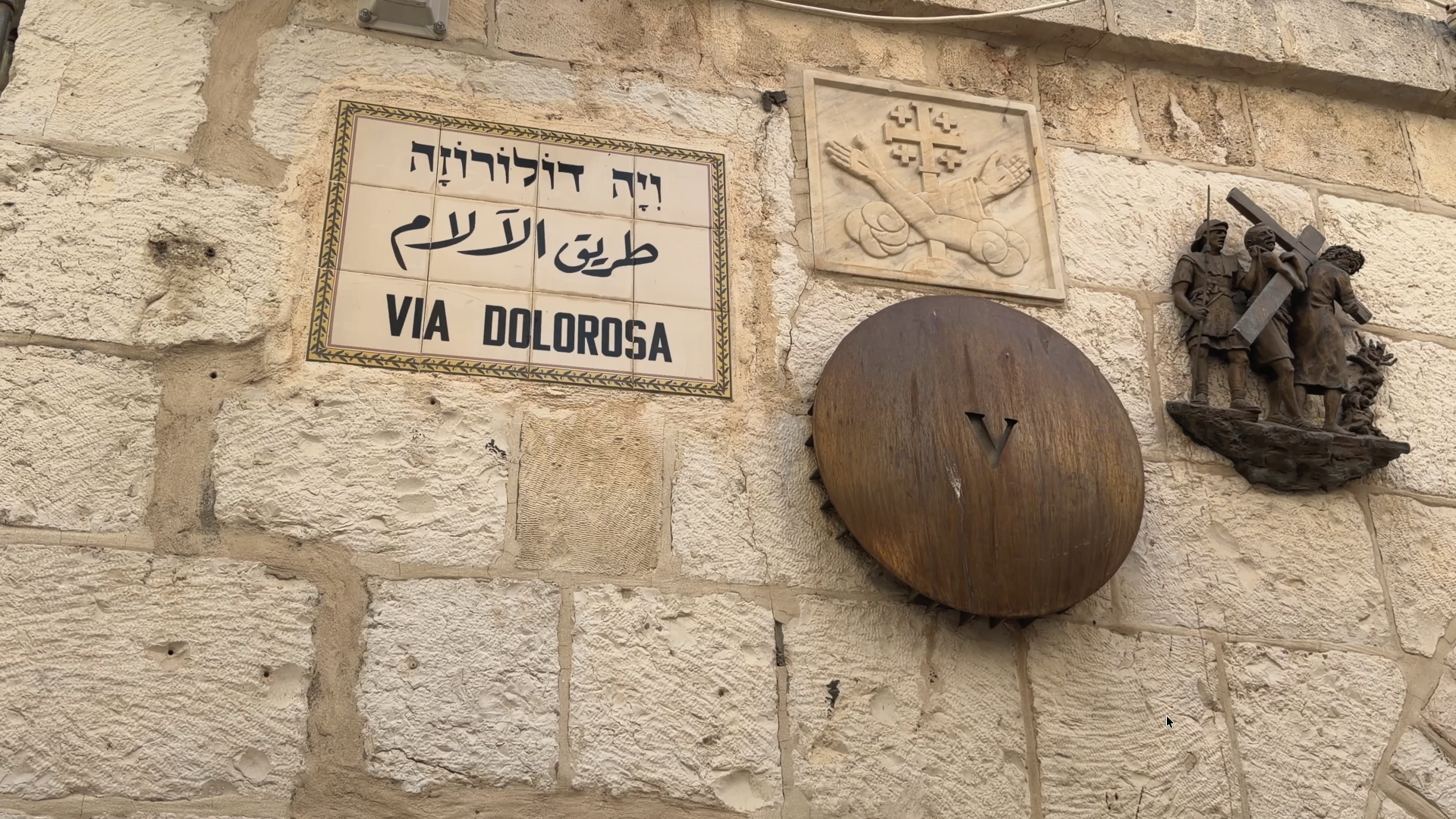
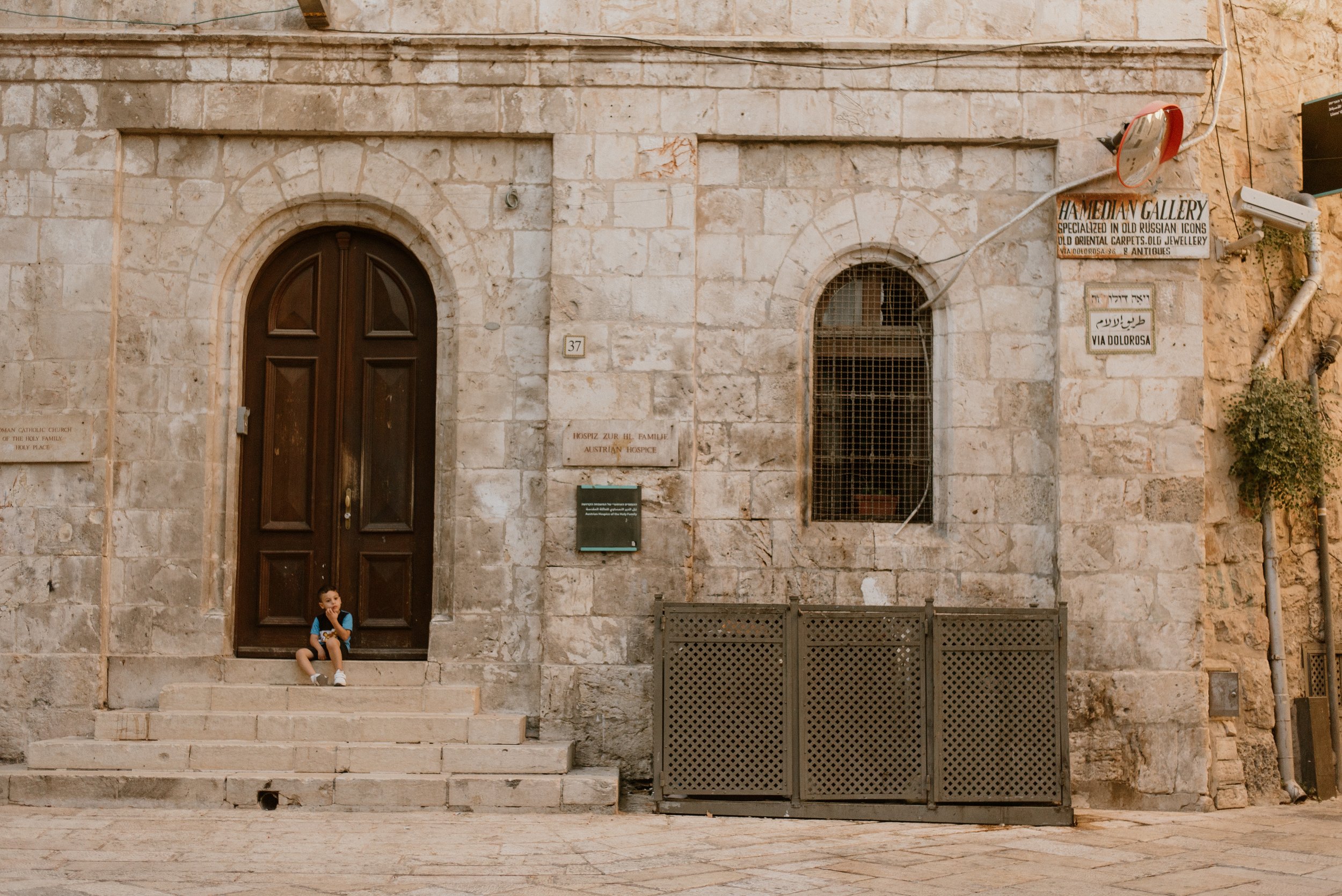
Inside the walls of Jerusalem’s Old City, a winding route of about 600 meters (2,000 ft.) runs west from near the Lions’ Gate to the Church of the Holy Sepulchre. Christians call it the Via Dolorosa, Latin for “the Way of Sorrows,” and honor it as the path Jesus (Yeshua) walked from Pilate’s judgment to the cross. Most of the route passes through the Old City’s Muslim Quarter, along narrow stone lanes crowded with shops, homes and churches.
The Gospels describe that final walk. After Pilate handed Him over to be crucified, Jesus went out “bearing His cross” toward Golgotha, the Place of a Skull (John 19:16–17). Along the way, Roman soldiers seized Simon, a man of Cyrene coming in from the country, and forced him to carry the cross behind Jesus (Matt. 27:32; Mark 15:21; Luke 23:26).
A great crowd followed, including women mourning and lamenting. Jesus turned to them and said, “Daughters of Jerusalem, stop weeping for Me, but weep for yourselves and for your children . . . For if they do these things when the tree is green, what will happen when it is dry?” (Luke 23:28, 31 NASB). The road ended outside the city, for Jesus “suffered outside the gate” (Heb. 13:12).
Believers have retraced these steps for centuries, but the route itself has shifted over time. Early Christian pilgrims placed Jesus’ trial at Herod’s palace on the western side of the city, near today’s Jaffa Gate. The Crusaders placed it at the Antonia Fortress, beside the Temple Mount. The route walked today, with its 14 stations, took its present shape in the 18th century. Some stations recall events recorded in the Gospels; others, such as Jesus’ three falls, come from later tradition.
Along the way, the first nine stations are marked by round plaques bearing Roman numerals, and the final five lie inside the Church of the Holy Sepulchre. The Eighth Station, where Jesus spoke to the women of Jerusalem, is marked by a cross and the Greek word nika, meaning “conquers,” set into the wall of a Greek Orthodox monastery. Near the start of the route, the Ecce Homo Arch takes its name from Pilate’s words, “Behold the Man!” (John 19:5), though the arch itself was built by the Roman emperor Hadrian about a century after the crucifixion. Every Friday, pilgrims join a procession that winds through the busy market streets from station to station.
The stones Jesus walked on may lie buried beneath today’s street, and no one can say with certainty where every step fell. But we know where the journey led: to the cross, where the green tree was cut down so that dry branches might live.
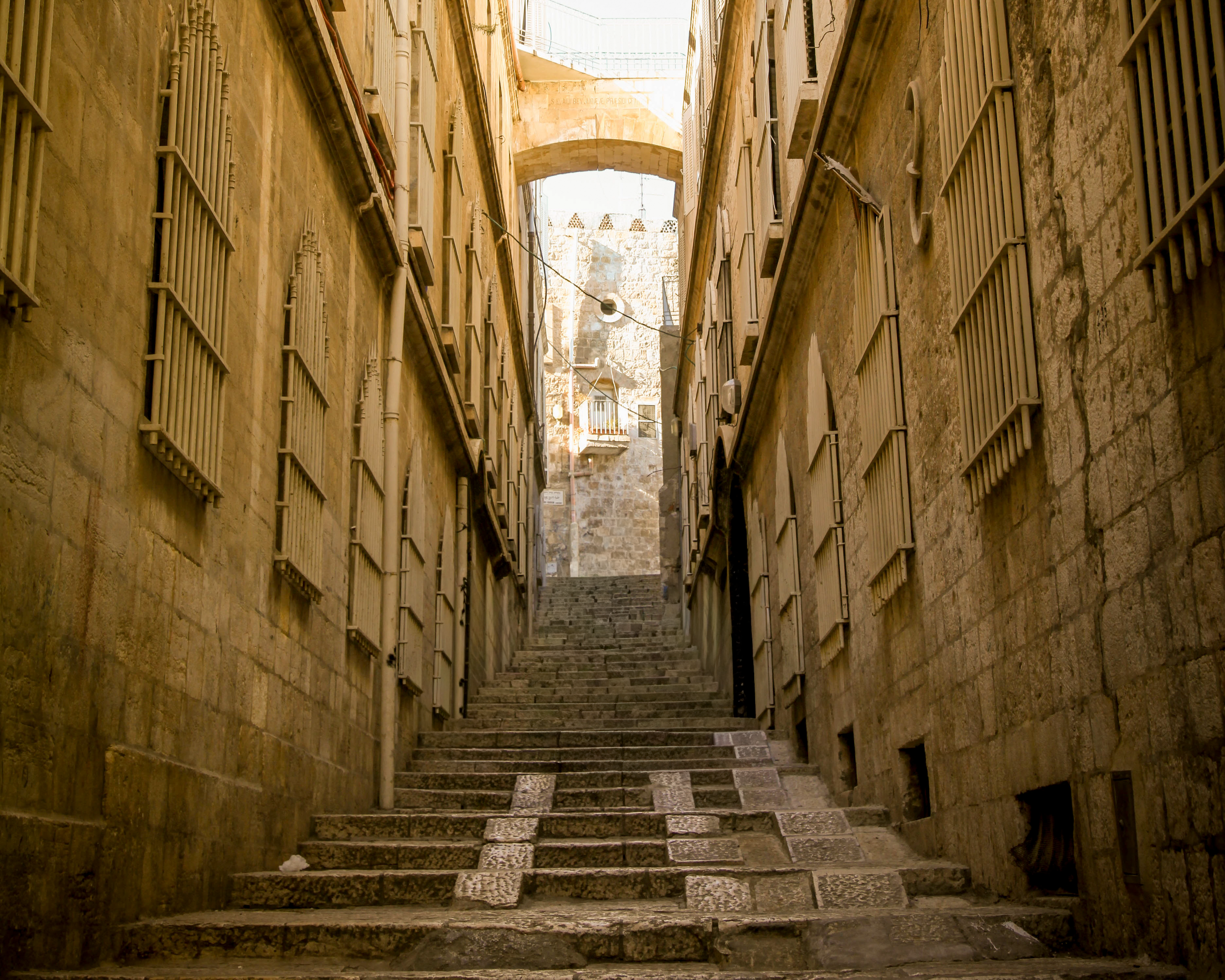
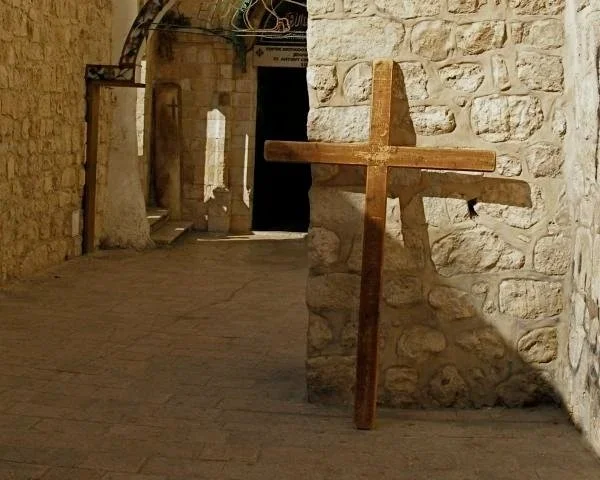
Photo Credit: SeeTheHolyLand.net/Wikimedia.org