Before Jerusalem became one of the most contested and celebrated cities on earth, it was a small hill surrounded by valleys. And everything began here.
The City of David is the original core of ancient Jerusalem, established by King David as the capital of his kingdom more than 3,000 years ago. Located just south of the Temple Mount, it sits strategically at the convergence of three valleys: the Kidron to the east, the Tyropoeon to the west and the Hinnom to the south, which provided natural fortification for the city’s earliest inhabitants. It was here that David brought the Ark of the Covenant. Here that Solomon was anointed king at the Gihon Spring. Here the prophets preached and the kings ruled.
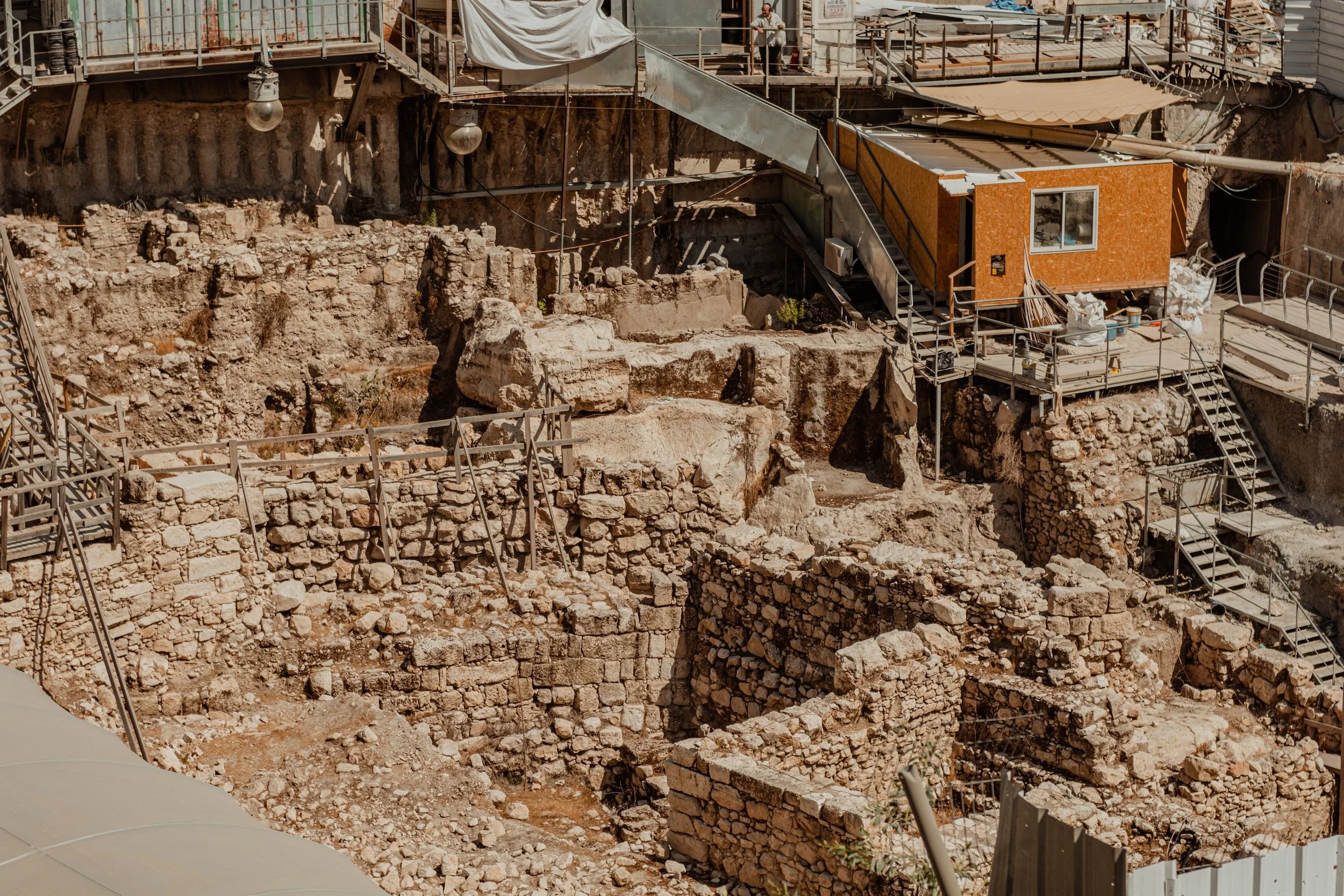
Today, the City of David is the most extensively excavated biblical archaeological site in the world, and discoveries continue to emerge from the soil. Visitors can walk through ruins dating back 3,500 years, trace the Pilgrimage Road that once carried Jewish worshippers up to the Temple, and stand before ancient walls that Nehemiah himself repaired. The site spans millennia of history, each era leaving its mark on this remarkable ridge.
But perhaps no feature of the City of David captures the imagination quite like Hezekiah’s Tunnel.
Carved through solid bedrock around 700 BC, this 533-meter (1,749-ft.) engineering marvel was King Hezekiah’s answer to an existential threat. With the Assyrian Empire advancing through Judah city by city, until only Jerusalem remained, Hezekiah recognized that control of Jerusalem’s water supply could determine the city’s fate. The Gihon Spring, Jerusalem’s primary water source, lay outside the city walls. So Hezekiah ordered a tunnel cut through solid rock to redirect the spring’s water to the Pool of Siloam, safely inside the city.
Two teams of diggers began from opposite ends and met somewhere in the middle—without GPS, without radar, without any modern technology to guide them. The moment they broke through is recorded in the Siloam Inscription, discovered in the 1800s when a boy exploring the tunnel felt a strange stone in the dark. The ancient Hebrew inscription describes the diggers hearing each other’s axes through the rock and the moment they finally embraced. Both the tunnel and the pool it feeds remain accessible to visitors today, just as Hezekiah engineered them.
The Gihon Spring that made all of this possible still flows. The inscription that commemorated it is preserved. And in the ground just steps away, archaeologist Dr. Eilat Mazar unearthed two clay seals, each barely the size of a fingernail, bearing the names “Hezekiah, Son of Ahaz, King of Judah” and “Isaiah the Prophet.”
Not simply a matter of faith. A matter of fact.
When Ze’ev Orenstein says the City of David is where the words of the Bible come to life, this is what he means. This site stands as an enduring testament to the accuracy of the Bible and the unending connection of the Jewish people to the Land of Israel.
City of David