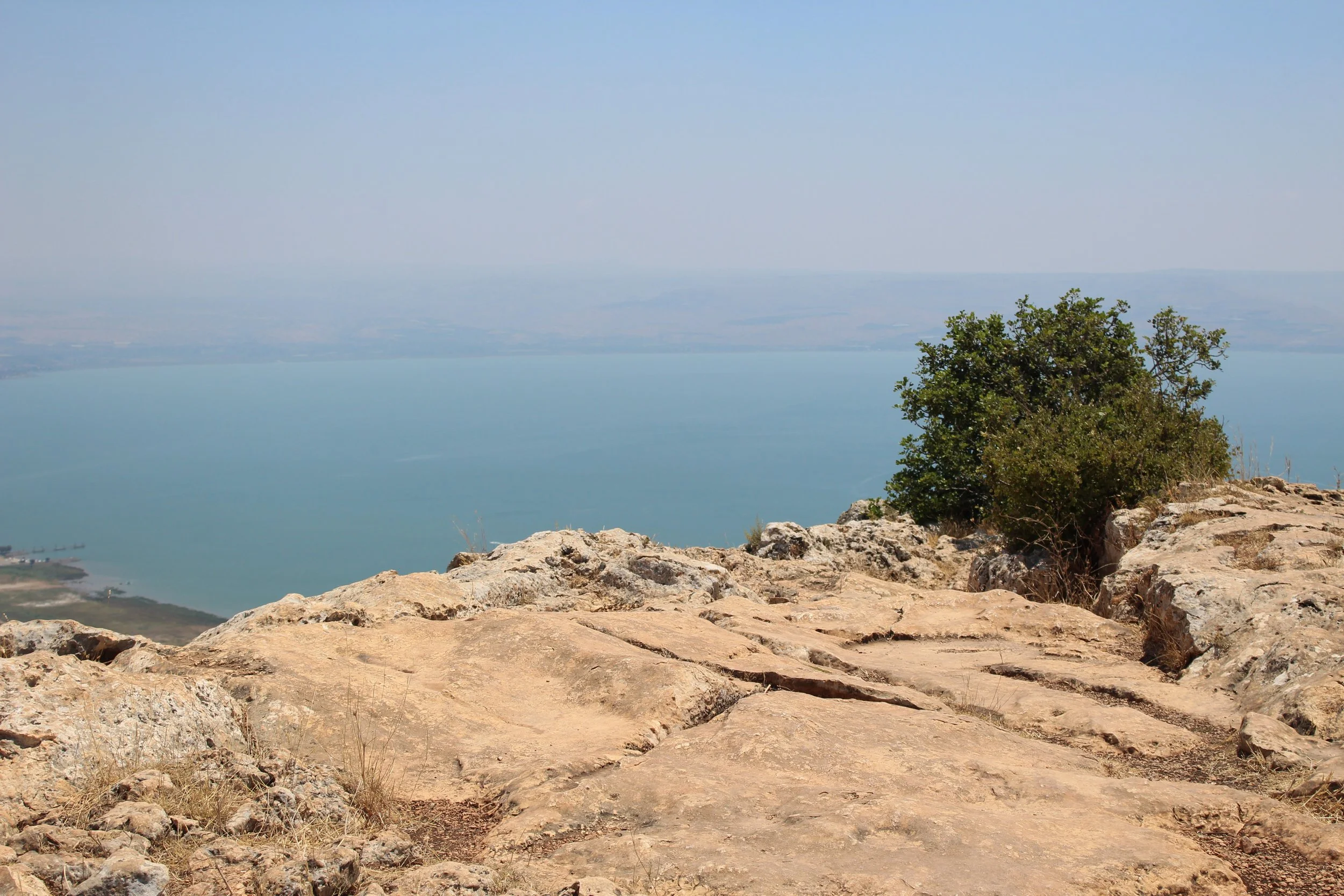
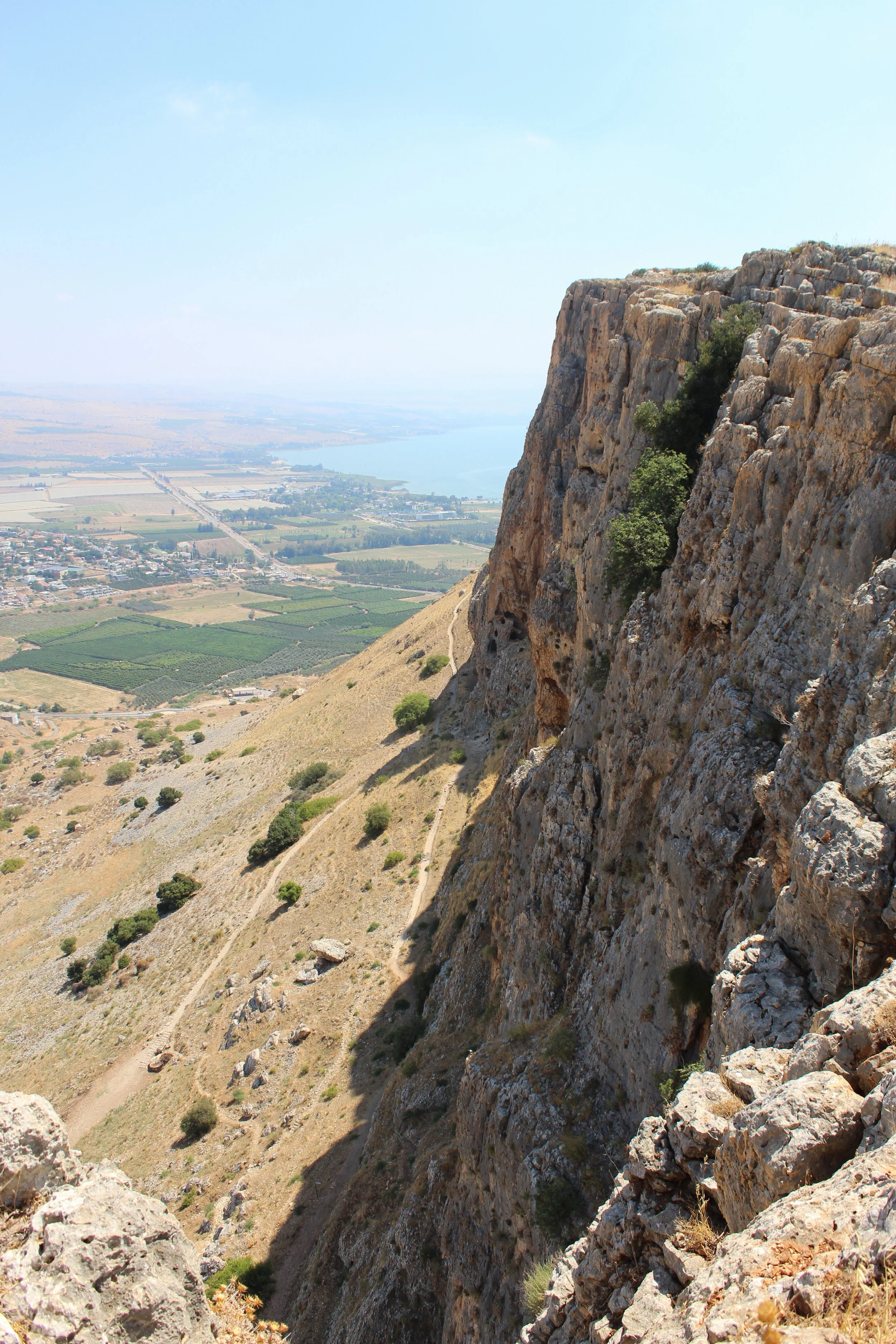
Towering some 1,200 feet (365 m.) above the Sea of Galilee, Mount Arbel, though not mentioned by name in the Bible, stands as a landmark of deeply significant biblical geography. From its heights, visitors take in a sweeping panorama of the fertile plain of Gennesaret and the shoreline where Jesus spent the majority of His earthly ministry: where He healed the sick, cast out demons, fed crowds of thousands from a simple fare of fishes and loaves, and calmed the stormy sea.
Spread out below are significant sites of the region, including the archaeological site of Magdala, the ancient hometown of Mary Magdalene; Chorazin, where Jesus ministered and worked miracles; the Mount of Beatitudes, where He delivered His Sermon on the Mount; and Capernaum, the fishing village that served as the center of His earthly ministry.
Many believe Arbel is the “mountain which Jesus had appointed,” the site of His post-resurrection gathering with His disciples and the delivery of the Great Commission (Matt. 28:16–20). Standing at the summit—the tallest peak in the region—it is easy to imagine this mountain as a natural platform from which Jesus commissioned His followers to carry the Gospel to the ends of the earth.
Arbel’s cliffs are pockmarked with natural caves that tell their own layered history. The Syrian general Bacchides drove Jews into these caves during the Maccabean revolt in 161 BC. Nearly a century later, Herod the Great routed criminals sheltering here as he consolidated his rule over Galilee. The ruins of Hellenistic, Roman and Byzantine settlements still lie along the cliffs and at the summit, including the remains of an ancient synagogue excavated in 1905, a reminder that this mountaintop has been a place of community and worship for millennia. The synagogue ruins lie within the modern Arbel Moshav, a cooperative agricultural community and a living reminder of the continuous thread of Jewish life here.
Mount Arbel also overlooks the route of the ancient Via Maris, Latin for “the Way of the Sea,” a Bronze Age trade highway that connected Egypt to Mesopotamia, passing directly through Galilee. It was along this road that merchants, armies and ideas traveled for thousands of years. It was this same corridor that the Assyrian Empire swept through when it first brought darkness to the lands of Zebulun and Naphtali, the very region that Isaiah promised would be the first to see a great light.
In this episode of Ignite the Truth, Eilir-Wyn Treharne, Bridges for Peace’s deputy director of Israel Operations, opens Isaiah 9 and the promise of Sar Shalom, the Prince of Peace, from this storied and stunning vantage point above the Galilee, where Jesus walked, taught and proclaimed the peace Isaiah had promised.
Mount Arbel